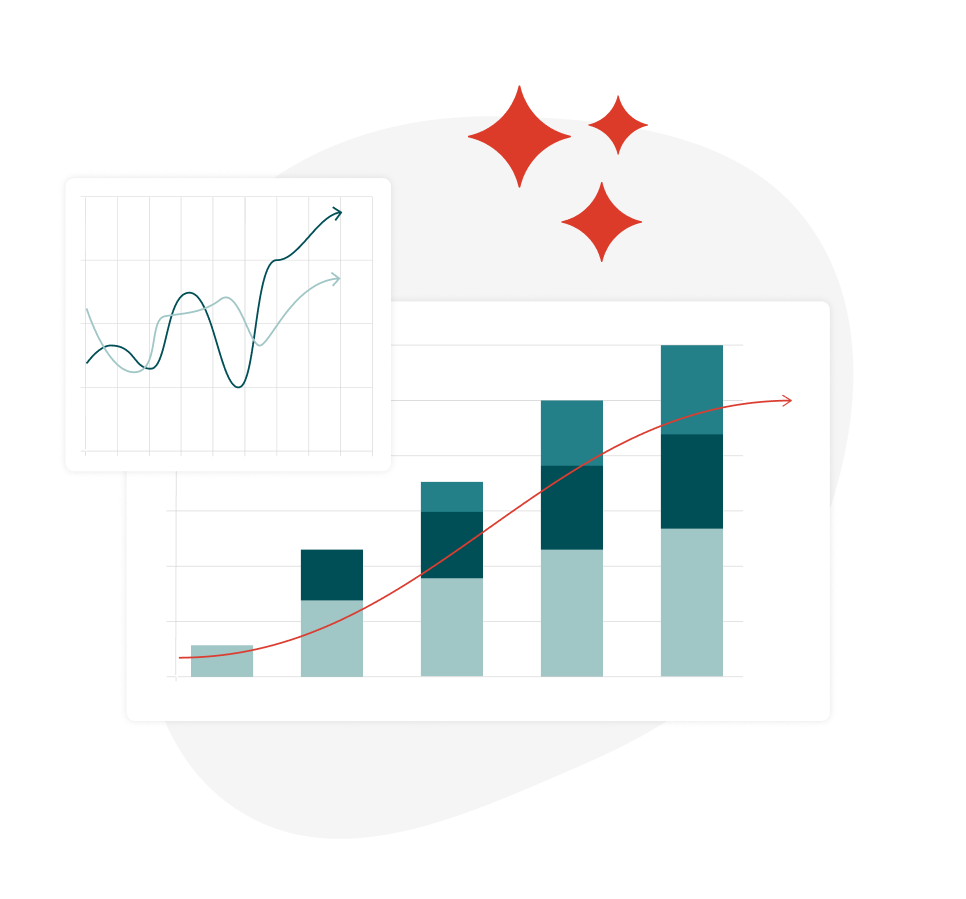
Data in the rearview mirror won’t help you hire today. That’s why before we even begin recruiting, we decide on what talent management metrics are most important to you and build real-time dashboards to track them.
Rather than “set it and forget it” reporting, these dashboards drive regular conversations that lead to significant improvements.
Ask most HR teams how hiring is going and you'll hear about time to fill. It's a tidy number, and it tells you almost nothing. A 30-day time to fill sounds fine until you learn the role has been opened and refilled three times because no one stayed past their first month. (And some positions just take longer to fill because of the specialized experience they require.) Time to fill can't tell you whether a result is good or where the problem is hiding. That’s why we look beyond this to dig into the metrics that really matter, including:
Business case metrics are the numbers your CFO already watches, the ones that show up on the profit and loss (P&L) statement. These include:
Every unfilled revenue-producing role is capped growth, and every early departure erases a hire you already paid to make.

Talent metrics answer two simple questions: Do you have the right people? And are they staying? These include:
Tracking these together tells you whether your talent management strategy is working or just busy. A team can hit its hiring goal every month and still lose ground if the people it hires don’t stay or don’t perform. Employees who stay past 90 days are much more likely to stay for a year or longer. The good news is that when our clients have better hires and they stay longer, they see better customer retention, too.

Recruiting and retention metrics are the operational numbers that show where your hiring process is healthy and where it’s stuck.
Two examples show why these matter. Time to schedule interviews is a small number with an outsized effect. A strong candidate who waits a week to hear back has usually already taken another job, so an early delay costs you the hire before you ever meet. With Talentcare Crew’s AI interview scheduling, our clients schedule interviews within two days of a candidate applying, which removes one of the most common early bottlenecks.

Metrics only matter if someone acts on them. Talentcare builds a real-time dashboard around the metrics you chose, then uses it to run a rhythm of reviews that keep hiring moving toward your targets. Here's how that works in practice.









Talent management metrics are the measures you use to track the inflow, throughflow, and outflow of talent across your organization. Used well, they connect your HR policies to business goals and reveal the strengths and weaknesses in your overall approach. Talentcare focuses on the metrics that predict frontline hiring success and revenue: business case metrics, talent metrics, and recruiting and retention metrics.
It depends on your business, but a few talent management KPIs earn their place on almost every dashboard: quality of hire, voluntary turnover rate, offer acceptance rate, cost per hire, and retention past 90 days. Quality of hire is a composite of performance, cultural fit, and retention. Voluntary turnover rate flags retention problems early, often before they show up in your revenue. We build your dashboard around the KPIs that map to your targets rather than a generic checklist.
Time to fill measures how long a role stays open, but it can’t tell you whether that result is good or where a problem is hiding. A fast time to fill means little if those new hires leave in 90 days, and a slow one might reflect a deliberately selective interview process for a critical role. We track cycle times at each stage instead, so you can see exactly where candidates move quickly and where they stall.
We tie hiring directly to the numbers on your profit and loss statement. For frontline roles, every filled revenue-producing position adds capacity and every early departure erases it, so net capacity and turnover translate into dollars.
Continuously, with structure. Every hiring manager has real-time dashboard access, and we hold monthly and quarterly reviews with your team to analyze trends, respond to changing needs, and reset targets. Regularly measuring your talent management strategy this way is what keeps it improving instead of drifting, and it gives you a clear talent management metrics report to bring to senior leaders whenever you need to make the case for what’s working.